
The Trust Collapse Nobody Argues About
Last Tuesday I sat in a city council meeting where two residents cited the exact same news story to prove opposite points. One said it proved the mayor was corrupt. The other said it proved the media was corrupt for reporting it that way. Neither had actually read the original piece. This scene plays out thousands of times daily across the country, and it represents something more serious than simple disagreement. It represents a structural failure in how we share reality.

The numbers back up what we’re seeing in those rooms. Global media trust has hit historic lows according to the Edelman Trust Barometer, dropping year after year with no recovery in sight. But here’s the part that actually matters: the problem isn’t uniform. Trust hasn’t collapsed evenly across demographics and ideologies. Instead, we’re seeing a sharp split where political orientation now predicts which news outlets someone perceives as credible with nearly the same accuracy as a zip code predicts voting patterns.
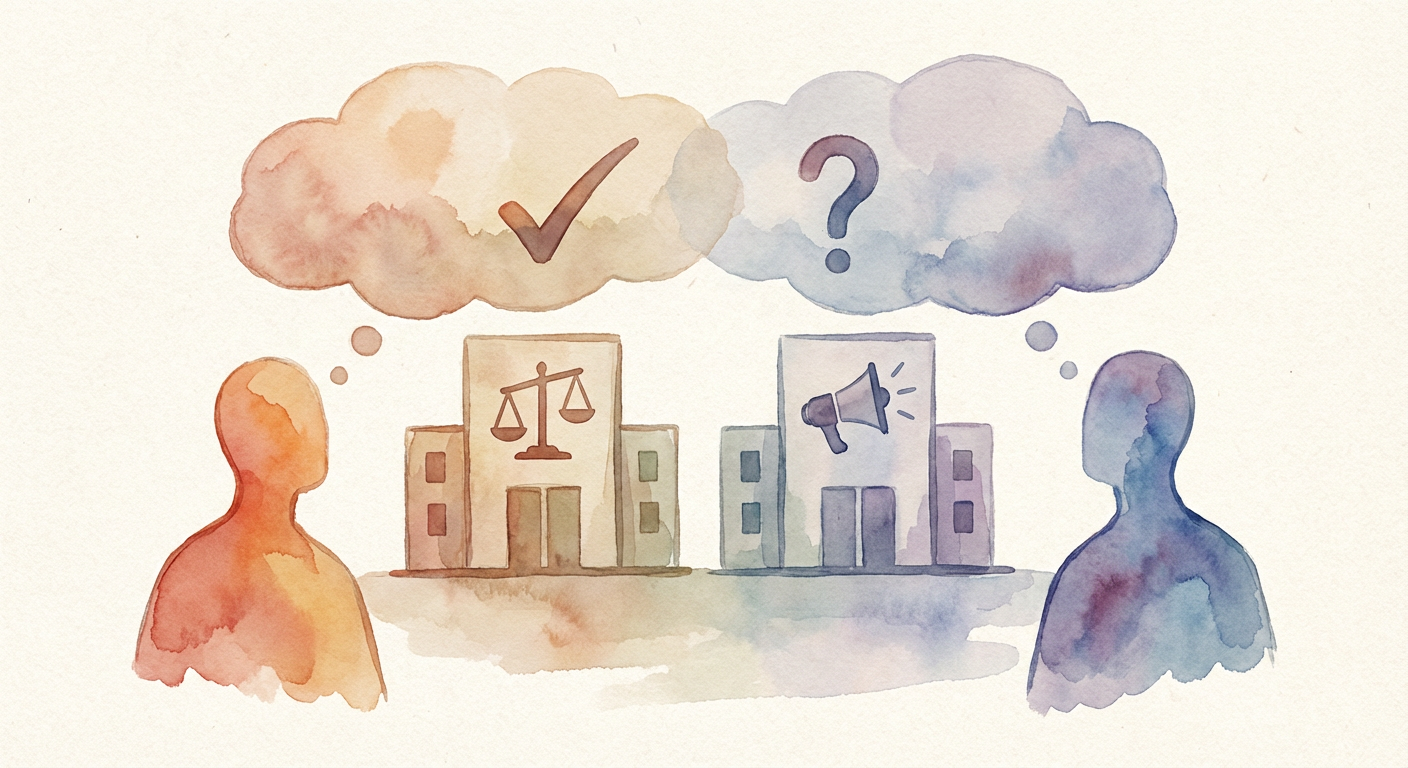
This polarization in perceived credibility creates a trap. When you trust outlet A and I trust outlet B, and we’re receiving fundamentally different factual claims from each, we’re not disagreeing about interpretation anymore. We’re disagreeing about what happened. That’s harder to fix than it sounds.
Why Fact-Checking Isn’t Enough
Fact-checkers have proliferated. Organizations now exist in most major markets doing rigorous, often excellent work catching false claims. The problem is they’re playing defense in a stadium where the offense already scored. By the time a fact-check runs, the false claim has usually moved through social networks, shaped opinions, and calcified into identity. The person who believed it has already invested emotionally in that belief.
Research into this dynamic shows something counterintuitive: directly correcting misinformation often fails to change minds. Sometimes it backfires. People who’ve accepted a false claim don’t just discard it when presented with evidence. They integrate that evidence into their existing worldview, often by deciding the fact-checker itself is biased. You can see this play out in real time on social media. Someone shares a false story. A dozen fact-check links appear in replies. The original poster responds with “I don’t trust that source,” and the conversation dies with the false claim still standing.
First Draft misinformation research has documented this pattern extensively. The challenge isn’t creating better fact-checks. The challenge is reaching people before they’ve locked into a false belief. That realization has shifted how serious misinformation researchers now think about solutions.
The Inoculation Approach That’s Actually Working
Instead of trying to correct what’s already believed, researchers are experimenting with prebunking: exposing people to weakened versions of misleading arguments before they encounter the real thing. Think of it like a vaccine. You’re not treating the infection. You’re teaching the immune system to recognize it.
The approach is surprisingly effective. When people understand how misinformation typically works, what manipulation techniques look like, and how to spot emotional reasoning masquerading as fact, their resistance to false claims actually improves. They become harder to fool. This works better than waiting for fact-checks because it changes how someone processes information in the moment, not after they’ve already decided what to believe.
This is why media literacy matters beyond the classroom. It’s not about making people skeptical of everything. It’s about teaching specific recognition skills. How does a headline use urgency to bypass your critical thinking? How do real quotes get ripped from context? What do synthetic images actually look like when you know what to look for? These are learnable skills that actually stick.
Platform Labels Don’t Move the Needle
Tech companies have tried attaching warning labels to misinformation. A little flag saying “This claim is disputed” or “Multiple independent sources say this is false.” The intent made sense. Surely a visual warning would make people pause before sharing.
Studies show it largely doesn’t work. Warning labels reduce sharing slightly among people already skeptical of a claim, but they do almost nothing to stop people who want to believe it. In some cases, the label actually increases engagement, as people click through specifically to see what they’re being told is wrong. Sometimes seeing a warning just triggers defensiveness. Someone thinks: “They’re censoring this, which means it must be important.”
This has created a frustrating gap between what platforms do to address misinformation and what actually changes behavior. The work looks good in a corporate press release. But in terms of actual impact on what people believe and share, it’s nearly invisible.
The New Problem Nobody’s Ready For
Here’s where things get genuinely complicated. For years the challenge was: true story gets mangled and spreads. Newsrooms still struggle with that. But synthetic media generated by AI is creating a different problem entirely. It’s not a mangled truth anymore. It’s something that never happened, created so convincingly that distinguishing it from reality requires forensic skills most people don’t have.
I’ve watched newsroom editors age visibly in the past year watching AI capabilities improve. The synthetic images that seemed obviously fake six months ago look completely real now. The deepfake videos that required Hollywood-level production work are becoming faster and easier to create. This isn’t theoretical anymore. It’s happening now, and verification processes that worked for catching Photoshop mistakes don’t work for this.
The Reuters Institute Digital News Report is tracking how this uncertainty affects trust, and the data is concerning. When people aren’t sure what’s real anymore, they don’t necessarily become more careful consumers. Many just check out entirely. They decide that if you can’t trust what you see, why bother trying to stay informed?
What Actually Works
So what’s the move? First, recognize that this isn’t fixed by better algorithms or warning labels or fact-checkers alone. Those are tools in a larger system. The real work is slower and less satisfying: building habits around information consumption. Calling sources like I do professionally isn’t just a journalistic practice. It’s a survival skill now.
It means considering where your information comes from. Not dismissing entire outlets, but paying attention to the specific reporters and publications that do verification work you can actually see. It means being suspicious of stories that perfectly confirm everything you already believed. It means being willing to read something from a source you usually don’t trust if a topic matters enough to warrant the effort.
Most importantly, it means accepting that staying informed in this environment takes more work than scrolling headlines. There’s no fix that makes this easy again. But understanding why the system broke helps you navigate it more effectively than pretending everything’s fine.
What changed your own information habits? I’m genuinely curious which of these pressures has shifted how you consume news.